
 Parental conflict can be a huge source of stress for parents and children alike

All family members need enough harmony to feel loved and secure. Everyone wants and needs to feel emotionally safe and supported, to feel seen, heard and understood. Many couples struggle on, assuming things can’t get any better, feeling powerless. The more misunderstandings and resentments mount, the harder it becomes for parents to work well together. All couples have disagreements. When those differences can be worked through respectfully and both parties reach satisfying solutions and agreements, children tend to be less affected and can indeed learn healthy conflict resolution skills. Conflicts of wants and needs and values are normal in families and can’t be and shouldn’t be avoided.
However, when children are exposed to relationship conflict that is intense, frequent, without resolution and/or abusive, it impacts them negatively in many ways. Living with conflict can compromise each parent’s connection with their child, it can result in many unhealthy behaviours in children stemming from increased stress and insecurity, it can lead to sibling conflicts and hinder the child’s self-esteem and resilience.
Learn more about the impacts of parental conflict on child in Parental Conflict – Is it harmful to children?
Healthy communication skills need to be learned and practised
in a similar way to learning to peacefully parent. In fact, many parents who have been through our Step by Step eCourse have reflected that their relationship with their partner improved dramatically as a result of bringing more of those skills into their partner relationship. Some of the skills that make a big difference are using I statements, active listening, reflecting back what you hear, learn to acknowledge each other’s perspective even when you disagree. To avoid becoming harsh or cold, parents need to learn to slow down and be mindful of the emotions being triggered inside them.I’m a great believer in having talks about how you talk; talking about talking at a time when you both have time and headspace to really work to create some healthy guidelines.
Suggested guidelines to create emotional safety
- It helps to begin tricky conversations by creating common ground through empathising or affirming that these issues are difficult and stressful for you both.
- You help to diffuse power struggles when you can affirm that you both want what’s best for the child, by reassuring that you both have your child’s best interests at heart.
- With emotive topics, organising a specific time and space away from your child to talk and be heard tends to result in more constructive communication for both parties.
- The more charged the topic can be, the more important it is to create and agree on guidelines that maintain emotional safety and to read them out together regularly.
- To set up safety guidelines, both parties can express what they need to feel safe to express their thoughts and feelings, then work together to write out agreements both parties are willing to agree to.
- Weave into the agreement permission for either party to negotiate a pause when they start to feel overwhelmed or triggered, a word like “pause” or hand gesture or both.
- When one partner wants to talk and the other can’t agree to it, talk about when you will talk.
- Include in the agreements that both parties avoid labelling, black and white statements that start with “you always” or “you never” invariably lead to defensiveness.
- Avoid assuming the other’s intentions or emotions, but instead ask open questions like “in these situations, what do you feel?” or “it seems that what I just said was upsetting, what are you feeling about what I just stated?”
- Aim to hear, understand, reflect and acknowledge each other’s perspectives even when you don’t agree, this meets needs to feel heard and increases cooperation.
- Both partners commit to genuinely reflecting on conflicts and emotional conversations and then come back later to share their insights with the
Arguments create a high risk of damaging the warm connection
It’s important that each party tune in to and express their raw feelings with I Statements and avoid blaming or attacking language. When people speak from their very raw feelings, there’s a risk of expressing some big character judgments (like “you only care about yourself”). Anger and hurt feelings need to be felt and expressed within the safe holding of a mature conversation where both are willing to hear and acknowledge each other.
This is where your emotional safety guidelines are essential to bring forward the most conscious mature version of yourself. Some couples can bring attacks into an argument and somehow rebound and preserve the connection, yet the vast majority of couples won’t be able to do the emotional gymnastics that this involves. More commonly arguments that include character evaluations and harsh judgments tend to be remembered and can really damage the connection and trust.
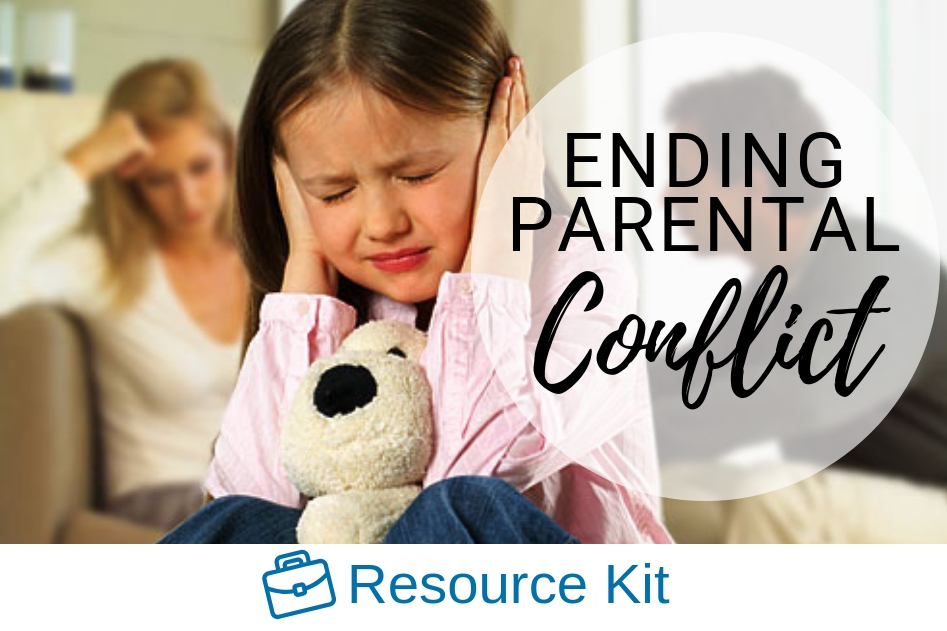
In this Parental Conflict resource kit (available to those with The Peaceful Parent Suite membership), Genevieve responds to a parent’s question relating to when she gets into an argument with her husband as a result of intervening when her husband gets into conflict with their child.
Anger tends to give people an over-inflated sense of being entitled to express that which they believe to be the truth
Just blurting out our grievances, although very understandable when we feel upset, usually results in one’s partner getting defensive and then feeling entitled to do the same. Although, this is very understandable when we feel upset. When in the stress response, the brain’s job is to scan for threats and our thinking becomes very black and white and lacks the complexity and ability to be compassionate, considerate or sensitive.
How conflicts were dealt with in our family of origin is where we learned the first rulebook about relationships. So without huge scrutiny of how we operate when conflict arises, we are at the risk of re-enacting similar ways of communicating that may be unhealthy and dysfunctional.
learned the first rules about relationships from how our family of origin dealt with conflicts. Without huge scrutiny of how we operate when conflict arises, we are at the risk of re-enacting similar ways of communicating. Often they may be unhealthy and dysfunctional.
This is why it’s very important that we all maintain impulse control when strong emotions rise up. This might read or feel like emotional repression but it’s more about healthy and responsible management of our emotions.
We all do need to really listen to and have safe places where we can express those raw emotions
Often valuable insights get lost because of our inability to express them in a way that our partner can hear and understand. When feeling attacked or misunderstood, very few people can operate from the heart and work to truly understand the other with care and compassion. Most parents benefit from finding other safe outlets for their frustrations like in an agreed active listening partnership or through counselling or co-counselling.
Organising an active listening partnership with another adult – also equally relevant to organising shared listening times with your partner.
Most adults grew up in families where they rarely if ever gained the emotional support and empathy that they needed
If a parent wasn’t listened to sensitively when they were young, they may not have learned how to tune in and listen to their feelings. It’s this inner reflective work of tuning in to, identifying and expressing our feelings that help us work through our anger, frustrations, rage and resentments. When painful emotions are not sensitively tuned in to, some of the very important needs driving those feelings may not have been met and a pattern of consistently invalidating one’s feelings can develop.
In emotionally dysfunctional families, the most painful emotions tend to be either repressed or expressed destructively and aggressively
Both repression and verbal aggression (including harsh criticisms) compromise the bonds, the trust, the open lines of communication and ultimately the love in close relationships. As adults parenting our children, we have a huge responsibility to learn to communicate differently. We have a huge responsibility to our children and their children to break the cycles of emotional repression and the patterns of communication that lack empathy and sensitivity.
Being skilled to resolve issues avoids communication breakdowns and resentments
One of the videos in our Ending Parental Conflicts Resource Kit covers the topic of how a parent can peacefully intervene when they become concerned or upset about how their partner is communicating with their child.
When a couple or co-parents have built up hard feelings and resentments, it becomes difficult to communicate,
on the tricky subjects in a way that’s emotionally safe and actually constructive. Yet it’s only through calmer and emotionally safe and constructive communication that either party will actually get to the point of having their needs met. Both partners need to feel seen, heard, understood, to have their good intentions acknowledged and ultimately to feel cared for and supported around the issues that are the toughest.
Feeling overwhelmed by parenting? Struggling with anger, frustration, or conflict at home?
Whether you’re dealing with constant yelling, outbursts of aggression, or just longing for more harmony in your family, The Peaceful Parent Suite has the solutions.
The PP Suite includes a host of eCourses of which the Peaceful Parent Step by Step eCourse is the main course. It’s the ultimate guide to transforming family dynamics and creating a calmer, more harmonious household.
This comprehensive eCourse simplifies key Peaceful Parenting skills, giving you the tools to invite more cooperation from your child while nurturing a deep sense of connection and mutual respect.
Along with this, our Peaceful Parent Suite includes other invaluable resources like:
- The Overcoming Overwhelm eCourse, a step-by-step process to help parents manage frustration and stress without resorting to yelling or stonewalling,
- The Mindful Parenting eCourse to cultivate patience and presence,
- The Meeting Aggression With Connection Resource Kit, which provides effective strategies to respond to challenging behaviour,
- The Discipline without Punishment eCourse, where you’ll learn how to set firm boundaries without using punitive measures,
- The Kid’s Conflict eCourse, offering effective strategies to guide children through conflict with empathy and understanding,
- Plus, access to supportive communities like the Self-Healing Group and Peaceful Partnering Group—because you shouldn’t have to navigate this journey alone.
Let us help you create a more peaceful, connected home, one small step at a time. Learn more here.

Common ground creates a space for each party to meet in the middle
There are so many issues to talk through when parents are not on the same page. In addition to talking through the specific issues, parents also need to carve out times where they talk about their patterns of communication. I recommend that parents agree to aiming to identify and express some common ground and aim to really hear and understand each other’s perspective. It’s important to not just aim to be heard as this results in a lot of conflict. When parents work hard to find some common ground and aim to both listen and reflect what the other has said, then there’s a foundation to start to work together to make agreements. It’s particularly good if you could both agree on what the best approach would be in these kinds of situations. It’s good when the parent in a calmer state can intervene in a way that brings relief to the parent who is near the end of their patience.
When one person is in a defensive mode, they may find it difficult to be aware that their partner feels attacked
For most couples I talk to this process doesn’t tend to be very smooth and indeed leads to lots of defensiveness (denying that he/ she said what he / she said is often a defensive tactic that people use to attempt to avoid taking responsibility). So for the parent who’s calmer to come in and intervene in a way that feels supportive and helpful, this usually needs to be agreed upon previously.
Unfortunately, most people didn’t experience a lot of truly loving support from another family member when they got into conflict as a child with a parent or sibling. Most of us learned that these were highly risky times and learned to expect criticism, anger or rejection at these times and these patterns are deeply hardwired.
Genevieve Simperingham is a Psychosynthesis Counsellor, a Parenting Instructor and coach, public speaker, human rights advocate, writer and the founder of The Peaceful Parent Institute. Check out her articles, Peaceful Parenting eCourses, forums and one-year Peaceful Parenting Instructor Training through this website or join over 90,000 followers on her Facebook page The Way of the Peaceful Parent

[…] Variety. Security. Fun. Friends. Opportunities to meet challenges & practice skills. Overall happy family. […]
[…] Ending Parental Conflict article […]
[…] Co-parenting can be tough! For parents who regularly get into a disagreement about how to deal with certain behaviours/patterns, this can lead to disconnection and conflict. […]
[…] irritation that they or their parents may struggle to identify. Sometimes children are affected by parental conflict, past traumas, and big life changes. Trauma in utero or during birth can have a much bigger impact […]